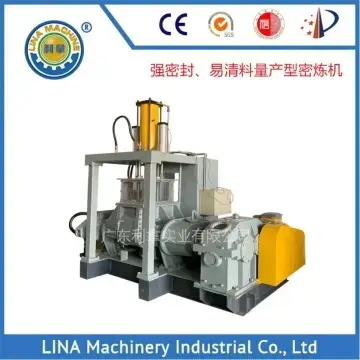
A dispersing kneader is primarily used for processing and mixing high-viscosity materials. It typically consists of a mixing chamber with specialized mixing elements, such as dual screws or dual cones, and a reaction vessel. The kneader operates by rotating the mixing elements, creating intense shear forces and kneading action to disperse and blend the materials uniformly. This equipment is commonly employed in industries like rubber, plastics, chemicals, coatings, and food processing.
On the other hand, a Dispersion Mixing Machines is designed for dispersing and mixing various types of materials, including low to high-viscosity liquids, powders, and solids. It utilizes a different mixing mechanism, often employing a rotating impeller or a high-speed rotor-stator arrangement. The mixer imparts high shear and turbulence to the materials, breaking down particles and promoting homogeneous dispersion. Dispersing mixers find extensive applications in industries like paints, inks, adhesives, cosmetics, and pharmaceuticals.
In summary, the key differences between a dispersing kneader and a dispersing mixer lie in their specific designs, operating principles, and target applications. While a dispersing kneader is specialized for processing high-viscosity materials with kneading action, a dispersing mixer is more versatile and used for dispersing and mixing a broader range of materials.